My first question when looking at influencer marketing tools is fairly simple: how much money will be left to pay the influencers? A platform might have everything I could possibly need, but that’s little comfort if its subscription eats up half the campaign budget.
Say I’m looking for three creators to promote a small shop. I need to know whether their followers might buy from that shop and what they charge for a post. Managing hundreds of partnerships? Perhaps later. Right now, I’d be paying for a problem I don’t have.
With that in mind, I’ve put together 10 options worth considering on a smaller budget. Each deserves a closer look at what the entry price actually buys you.
Table of Contents
What should small businesses look for in an influencer marketing tool?
It’s easy to buy more influencer marketing software than you actually need. You have a single campaign that you want to succeed. Therefore, you may only need a few people to help you promote your products. Yet somehow you end up comparing team permissions and reporting dashboards.
Useful things, sure. But who’s going to use them?
My preference would be to check the limits before getting too interested in the features. Think about your average campaign management, its needs and the tasks involved. How many creators will it require, and what do you need to know about each?
Audience fit deserves particular attention. You’d choose a guest post platform partly by whether it offers websites your customers might read. With influencers, the question is similar: are you reaching people who might actually want your products?
Start with these basic checks:
- Search filters: Can you find creators by location, topic, and the platform your customers use?
- Audience details: Can you see where their followers live? A creator’s own location only tells you so much.
- Contact options: Does the tool help you approach someone, or will you still spend an afternoon hunting for email addresses?
- Limits on the cheapest plan: How many profiles can you actually inspect before being asked to upgrade?
The learning curve is one additional frequently overlooked nuance. For your small business, you’ll have only yourself or your marketing guy to study and master the tool. If this process takes weeks and months, perhaps the tool is too complex and is not worth your time.
10 affordable influencer marketing tools to consider
Some businesses need help finding creators; others already have names and want to arrange the work. Keep your own task in mind as you compare these tools for influencer marketing. The cost matters, of course, but so does what you’ll still have to do yourself. No tool is automagical; rather, it’s an extension of your capabilities.
1. Collabstr
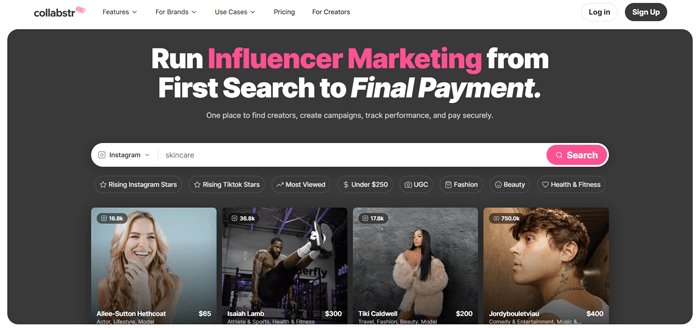
What it helps with. Collabstr lets you browse creator profiles and buy a content package directly. You can see what someone offers and their asking price before placing an order. That gives you something concrete to compare when you’re still working out what your budget will cover.
What you’ll pay. Searching is free, and you don’t need a subscription to hire someone. There’s a 10% hiring fee, though. A $200 package therefore comes to $220 with that fee added.
Where the free plan stops. Audience reports and advanced filters require a paid plan. Pro starts at $249 a month when billed annually (a substantial commitment for occasional use). For a first collaboration, I’d explore the free option and check whether it provides enough information to choose confidently.
2. Heepsy
What it helps with. Finding one promising creator often gives you a better idea of who else to look for. Heepsy’s lookalike search lets you use that profile to find similar people. You can also search by keywords and location, then save candidates together instead of keeping another dozen browser tabs open.
What you’ll pay. The free plan includes 500 search results and 10 advanced profiles per month. Starter raises those allowances and adds email outreach for $69 a month, billed annually. That’s $828 for the year.
Worth knowing. Those 500 results don’t mean 500 detailed audience checks. On the free plan, you get ten. I’d save those checks for creators whose content already looks suitable; opening profiles out of curiosity could use up the allowance rather quickly.
3. Afluencer
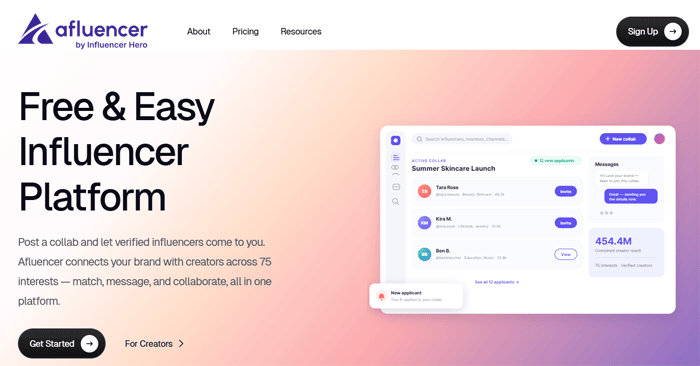
What it helps with. You can spend an afternoon finding creators, then another writing to people who may never reply. Affluencer gives you somewhere to post the collaboration and let interested creators apply. You still choose who to work with, but at least the conversation starts with someone who wants to hear more.
What you’ll pay. The Marketplace plan costs $49 per month and includes 60 invitation credits, premium filters, and support by phone, email, and live chat. Creator compensation needs a separate budget.
Worth knowing. An application tells you someone is interested. Whether they suit your business takes a closer look. Before discussing a post, I’d read their recent comments and check what else they promote. Someone applying enthusiastically to your offer might be just as enthusiastic about every other offer.
4. Social Cat
What it helps with. Social Cat connects brands with micro influencers on Instagram and TikTok, including creators open to gifted collaborations. For a small shop with products to send out, that’s worth exploring. You can discuss the arrangement and keep messages, contracts, and content together.
What you’ll pay. Essentials costs $99 a month and allows up to five creator collaborations within one campaign. Products, postage, and any agreed creator fees come on top of that.
Worth knowing. Gifted doesn’t mean cost-free. Sending five bulky parcels could make a noticeable dent in the budget before anyone publishes anything. I’d work out the cost of getting the product into each creator’s hands first. Then agree on what they’ll produce in return, so a parcel arriving doesn’t become the last thing you hear about it.
5. impulze.ai
What it helps with. You’ve found someone on Instagram who looks promising, but their bio tells you very little. As an influencer marketing research tool, impulze.ai helps fill in the gaps with audience information and creator contact details. You can also search across Instagram, TikTok, and YouTube, then save the people worth approaching.
What you’ll pay. There’s a free plan for exploring the tool. Solo costs $29 a month and includes five profile analytics reports, 100 contact unlocks, and space to shortlist 100 creators.
Worth knowing. Five reports could disappear before you’ve made a decision. I’d browse the actual accounts first and use a report when someone looks like a serious possibility. Otherwise, you risk spending your allowance on people you could have ruled out just by watching a few of their recent videos.
6. JoinBrands
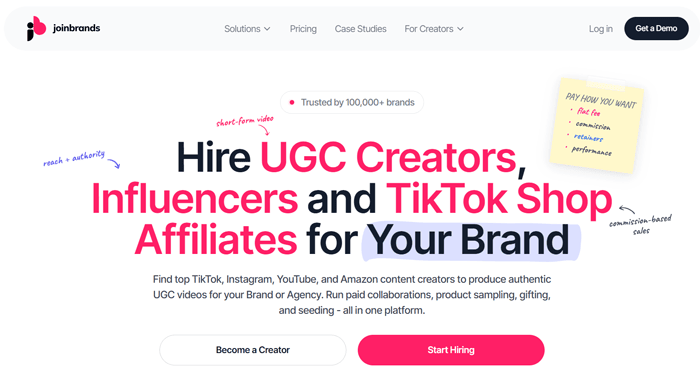
What it helps with. Perhaps your product needs a demonstration, and filming it yourself isn’t going particularly well. JoinBrands lets you hire creators to make photos and videos, with separate options for having them publish the content. Decide where you want that video to appear before choosing a campaign.
What you’ll pay. The pay-as-you-go option has no subscription charge but adds a 15% platform fee to creator payments. Start-up costs $99 monthly and reduces that fee to 12%.
Worth knowing. Getting a video delivered doesn’t mean it will appear on the creator’s account. JoinBrands lists “Content + Posting” as a paid-plan feature. I’d check that detail first if the aim is to reach their followers. Otherwise, you could receive exactly the video you ordered and still have to find an audience for it.
That’s why content discoverability deserves a little planning before filming starts. Could the video also support a useful blog post or go into your newsletter, rather than appearing once in a social feed?
7. TrendHERO
What it helps with. There’s only so much you can learn by scrolling through an Instagram profile. trendHERO adds audience analysis and follower-growth information, which is useful when the photos look right but you’re still unsure about paying for a promotion. I’d use its influencer marketing analytics as another check before making an offer.
What you’ll pay. Lite costs $15.99 a month for ten reports. You’ll need a higher plan if you also want to master influencer discovery.
Worth knowing. I’d use the reports alongside a proper look at the account. Read the captions, watch a few videos, and see how the creator handles questions. Someone could have an audience that fits your shop beautifully, yet present products in a way you wouldn’t want associated with it. The report can’t make that judgment for you.
8. Shopify Collabs
What it helps with. If your shop already runs on Shopify, Collabs is a sensible place to look for managing creator partnerships. You can invite people, give them affiliate links or discount codes, and track the sales they bring in. Commission payments can run through your Shopify bill.
What you’ll pay. The app is free to install. You still pay for Shopify, creator commissions, and any samples. Automatic commission payments carry a 2.9% processing fee: paying a creator $10 adds $0.29.
Worth knowing. An affiliate offer needs to be worth someone’s time. Before setting the commission, work out what a creator would earn from a typical order. I’d hesitate to offer a tiny percentage and then ask for a carefully filmed demonstration. The work involved matters as much as the influencer pricing.
9. Shoutcart
What it helps with. Shoutcart is a marketplace for buying promotional posts from social media accounts. You choose where you’d like your business featured and purchase a placement. That could suit a shop testing a particular offer before discussing anything longer-term with a creator.
What you’ll pay. Prices depend on the placement. Shoutcart’s terms list a $100 minimum spend, so don’t build your budget around the cheapest listing alone. Additional checkout fees also need to be included.
Worth knowing. Check exactly what you’re ordering: who supplies the image, who writes the caption, and how long the post stays up. I’d settle those details before paying. A brand mention can mean several things, and a low price looks less attractive if you were expecting a product demonstration but only bought space for an existing image.
10. HypeAuditor’s free tools
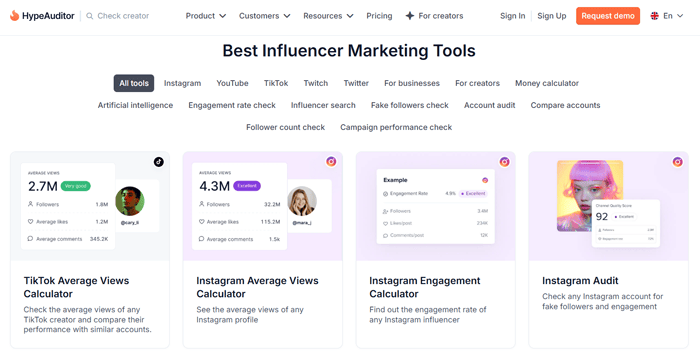
What it helps with. HypeAuditor’s free tools are handy when you’ve already found someone and want to check a few basics. The Instagram audit includes engagement rate, follower count, and the platform’s own audience-quality score. There are separate checkers for other platforms, including TikTok.
What you’ll pay. No subscription is needed for these basic tools. The free results are limited, and accessing the full platform is a separate purchase.
Worth knowing. This won’t arrange the collaboration for you. You still need to contact the creator, discuss the price, and agree on the work. For a business handling one or two partnerships, that may be fine. I’d rather do a little administration myself than pay for a larger system before knowing whether influencer marketing is something the shop will use regularly.
How to choose the right tool for your first campaign
After looking through the reviewed options, you might have all ten tabs open, plus additional ones where you can check prices and user reviews. Pause here, take a short break if you need, and come back with a fresh mind.
You are not buying one influencer marketing tool for your entire marketing career. After all, you only need enough influencer marketing software to get the first campaign underway.
So, here’s how I’d narrow it down:
- Decide what you’re buying. A video for your website? A creator’s recommendation to their followers? Write that down before comparing some of the best influencer marketing tools.
- Put a ceiling on the whole expense. Allocate a certain amount for the creator’s work, products, and PR. Now, whatever remains is going to be your software budget.
- Find the part you need help with. At this stage, you might not need an all-around solution. Depending on your current campaign performance and progress, you may only need to find influencers or to do the influencer outreach part.
- Try it with your own brief. Search for someone who could promote your actual product. Check whether the useful information is included in the plan you can afford.
- Check the commitment, then choose. Carefully examine potential hidden costs. For instance, a low monthly cost can come with a surprisingly large annual bill due to extras (which we often overlook).
Whatever you decide, I’d recommend leaving room to change your course later. Committing to work with the tool for years is a bad option. Shortly after the first collaboration, you should have a clear picture of which tasks took time, which information was useful, and which only created noise, and whether you’d want to pay for the same influencer research tool again.