Search changed when users stopped clicking blue links and started talking to models that reason through their problems. Most software companies and e-commerce brands still look at traditional ranking reports while their potential customers get direct answers from ChatGPT or Perplexity. This shift makes choosing the right technical data bridge vital for survival in a zero-click world. The best SEO data API is the one that connects your internal systems to both traditional search results and the citation patterns of generative engines.
Table of Contents
TL;DR: What is the Best SEO data API?
The SE Ranking API is the most effective choice for 2026 because it balances professional data depth with a modern infrastructure built for AI-driven search. It functions as a standalone product, meaning your dev team can pull data without paying for seats in a dashboard they might never open. We think the standout feature is the official Model Context Protocol (MCP) server, which allows your LLMs to grab live search data directly. For SaaS and e-commerce teams managing complex projects, it offers a project-level API for SEO to automate existing workflows and a Data API for high-volume research. It handles rank tracking, backlink monitoring, and technical audits with high accuracy and a low entry cost.
Detailed Comparison of SEO Data API Providers
| Tool | Monthly Minimum | Primary Data Type | AI/AEO Capability | Best For |
|---|---|---|---|---|
| SE Ranking | $50.00 | Multi-source (Rank, Link, Audit) | MCP Server + AI Tracker | Agencies & SaaS |
| DataForSEO | $100.00 | Raw SERP & Merchant Data | AI Mode SERP API | Tool Builders |
| Serpstat | $129.00 | Database & Keyword Intelligence | Parser variety | Small Teams |
| Semrush | $499.95 | Traffic & Competitive Intent | AI Visibility Toolkit | Enterprise |
| Ahrefs | $1,499.00 | Backlink & Authority Graphs | Brand Radar | Link Experts |
| Majestic | $399.99 | Link Graph & Flow Metrics | Link Context API | Domain Pros |
SE Ranking SEO Data API
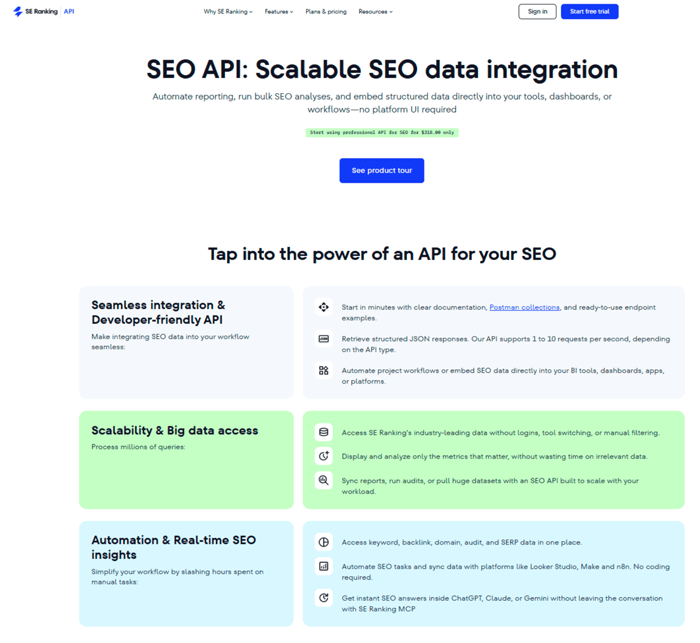
- The Data API is a standalone product that does not require a subscription to the main platform.
- The Project API allows developers to automate management tasks within existing SE Ranking accounts.
- Model Context Protocol (MCP) server support enables direct connectivity between search data and AI assistants like Claude.
- AI Search API tracks domain visibility and brand mentions in Perplexity, Google AI Mode, ChatGPT, Gemini, and Google AI Overviews.
- Rank tracking endpoints provide data unaffected by location-based noise or browser personalization.
- Backlink analysis tools offer domain trust scores and referring domain lists for authority monitoring.
- Technical site audit endpoints identify crawl errors and technical regressions programmatically.
- Keyword research database gives access to volume, difficulty, and competitive intent metrics.
- Official connectors for n8n, Make, and Looker Studio are provided for no-code automation.
- Standard response times are consistently between two hundred and five hundred milliseconds.
SE Ranking is best for
Growing agencies and mid-market SaaS companies that need an affordable but high-powered best SEO data API to feed their reporting stacks. It works for teams that need both raw data for research and a structured environment for project management. Developers building agentic SEO workflows will find the MCP server vital for giving their AI models real-world grounding.
Pros & cons of SE Ranking
Pros:
- Low cost of entry at 50 dollars for 250,000 credits.
- Standalone pricing models avoid the need for expensive per-seat licensing.
- Documentation is highly developer-friendly with Postman collections ready for testing.
- Built-in AI visibility tracking helps transition from traditional SEO to AEO and GEO.
- High uptime and reliable data delivery for technical IT projects.
Cons:
- Requests per second are lower than pure scraper services like DataForSEO.
- Migrating from other providers might require remapping custom data structures.
- Access to certain high-volume credit tiers may require coordination with support.
Pricing overview of SE Ranking
The credit-based system is designed for predictability and scalability.
- Standalone API: Packages start at $50.00 for 250,000 credits on a pay-as-you-go model.
- Platform Add-on: Users on Core or Growth plans can add API access starting at $149.00 per month for 100,000 credits.
- Annual Standalone: High-volume teams can secure 24 million credits for $318.00 annually.
- Consumption: Basic SERP requests cost roughly 10 credits, while complex keyword reports are billed per record.
- Credits in the standalone plan do not expire, which helps with budget management.
Use Cases of SE Ranking
- Building internal SaaS dashboards that correlate product usage with organic search rankings.
- Automating technical SEO monitoring for IT outsourcing projects to prevent indexing issues during code deployments.
- Connecting search data to AI agents via the MCP server to automate market analysis and content planning.
- Tracking brand citations in AI-generated answers for e-commerce sites with high SKU counts.
- Feeding rank data into Looker Studio for white-label client reports that show ROI across channels.
DataForSEO API SEO
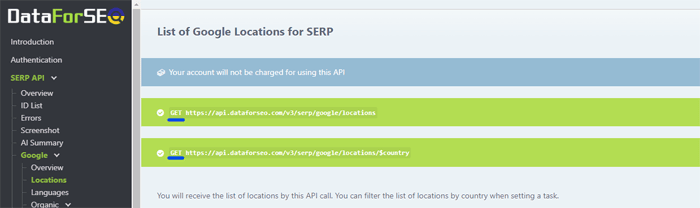
- The SERP API covers Google, Bing, Yahoo, YouTube, Baidu, and others with raw JSON output.
- Provides a dedicated AI Optimization API that includes LLM Mentions and AI Keyword Search Volume.
- Merchant API allows for scrAPIng product data and pricing from Amazon and Google Shopping.
- Backlinks API provides a live mode for real-time link data retrieval with a two-second turnaround.
- OnPage API enables deep technical crawls to detect broken links and content issues programmatically.
- App Data API tracks rankings and reviews in both the Apple App Store and Google Play Store.
- Live mode allows for instant results while Standard mode offers lower costs for async tasks.
- Webhook support allows the system to push data to your server as soon as a task completes.
DataForSEO is best for
Technical founders and data scientists building their own software products who need a raw API SEO layer. It is the top choice for high-volume data processing where cost per request is the primary metric. IT departments in large organizations often use this to fuel internal data lakes and competitive intelligence tools.
Pros & cons of DataForSEO
Pros:
- Most cost-effective choice for millions of requests at approximately $0.60 per 1,000 SERPs.
- No recurring monthly subscription fees; you only pay for what you actually use.
- Enormous data breadth covering search, social media, merchants, and mobile apps.
- Highly customizable requests allow you to specify location down to the ZIP code.
- Credits never expire, providing long-term value for intermittent dev work.
Cons:
- Technical barrier is high; it requires significant engineering work to build usable dashboards.
- Documentation is thorough but can be overwhelming for beginners.
- Standard mode is asynchronous, which might be too slow for some user-facing features.
Pricing overview of DataForSEO
The pricing is built on a transparent pay-as-you-go structure with a minimum deposit.
- Minimum Deposit: $100.00 is required to start using the system.
- SERP API (Standard): Approximately $0.0006 per request for Google results.
- SERP API (Live): Approximately $0.002 per request for real-time data.
- Backlinks API: Costs $0.02 per request and a tiny fee per row of data returned.
- Merchant API: Approximately $1.00 per 1,000 product rows in the response.
- Some specialized endpoints like Backlinks require a $100.00 monthly minimum commitment.
Use Cases of DataForSEO
- Powering the back-end of a new keyword research tool that processes millions of keywords daily.
- Building an e-commerce price monitoring engine that tracks competitor price changes in real-time.
- Analyzing brand sentiment in AI prompts to measure the effectiveness of a GEO strategy.
- Collecting data for scientific research into search engine bias and algorithm changes.
- Automating bulk backlink audits for thousands of domains in an agency portfolio.
Serpstat SEO Report API
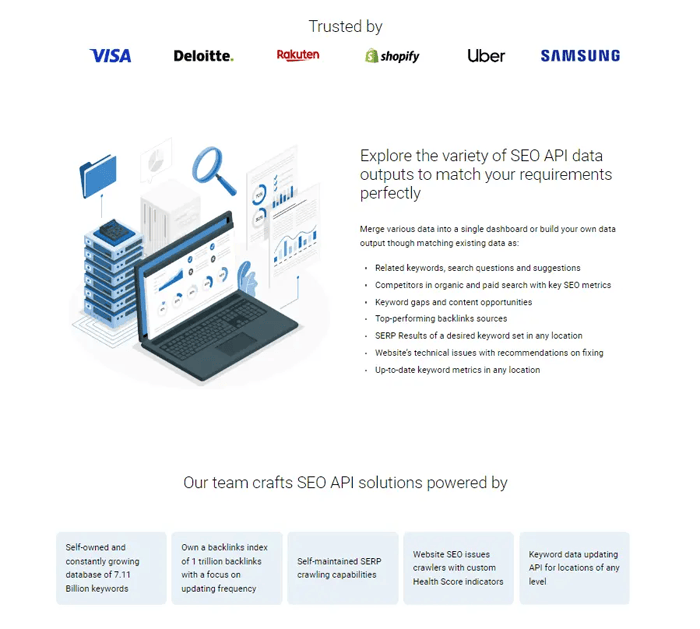
- The SERP Crawling API parses results from Google, Bing, and Baidu for local and global tracking.
- Provides access to a keyword database containing billions of keywords across 230 Google regions.
- Includes a Site Audit API for checking website health and identifying technical SEO roadblocks.
- Allows for raw HTML or structured JSON exports depending on your technical needs.
- Backlink API tracks referring domains, anchors, and domain authority metrics.
- API integration supports up to 10 requests per second for fast data fetching.
- Keyword clustering and text analysis endpoints are available for content teams.
- The system allows for multi-user management on higher-tier plans.
Serpstat is best for
In-house teams and small agencies that need a reliable SEO report API bundled with an easy-to-use interface. It fits projects where you need to track keyword positions and technical site health without the massive cost of enterprise suites. Freelancers and consultants in the IT outsourcing space often use it for its predictable monthly limits.
Pros & cons of Serpstat
Pros:
- Wide geographical coverage with access to hundreds of local Google databases.
- Unused credits roll over to the next month on many plans, reducing waste.
- Competitive pricing for large-scale keyword and site data compared to premium suites.
- Supports multiple languages including Python, Node.js, and PHP.
- Includes a keyword database that is excellent for competitive gap analysis.
Cons:
- API access is locked behind the Team plan or higher.
- Standalone SERP parsing requires a minimum budget of $300.00.
- The interface can be less intuitive for those used to minimalist dev tools.
Pricing overview of Serpstat
Serpstat uses a plan-based model with fixed monthly keyword and crawl limits.
- Individual Plan: $69.00 per month for basics, but no full API access.
- Team Plan: $129.00 per month (or $100.00 annually) includes full API access.
- Agency Plan: $499.00 per month (or $410.00 annually) for high-volume agency needs.
- SERP Scraper: Costs between $0.00065 and $0.0013 per result page depending on volume.
- Credits for the SERP Scraper do not expire at the end of the month.
Use Cases of Serpstat
- Creating monthly white-label reports for dozens of SEO clients using the export endpoints.
- Monitoring competitor keyword rankings across a specific set of 50+ local markets.
- Conducting bulk technical audits for a new client to identify quick wins during onboarding.
- Building internal content tools that use keyword clustering to plan blog calendars.
- Tracking backlink growth for a SaaS product to measure the success of a PR campaign.
Semrush SEO Monitor API
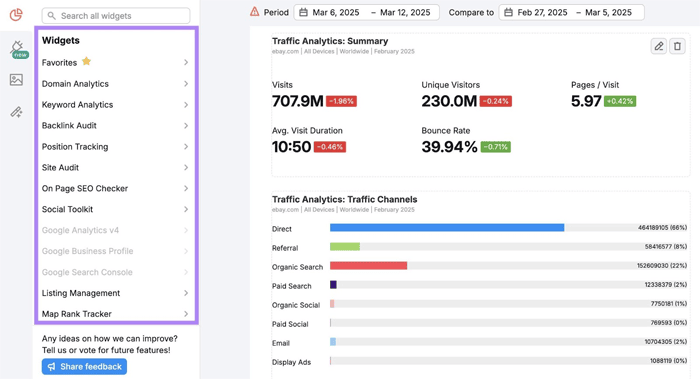
- The Standard API requires a Business subscription and covers domain, keyword, and backlink reports.
- Projects API manages position tracking, site audits, and local SEO campaigns programmatically.
- The Traffic Analytics API provides market-level data on audience demographics and interests.
- AI Visibility Toolkit tracks brand mentions and citations in ChatGPT, Perplexity, and Google AI.
- Domain reports give access to historical data for analyzing competitor performance over years.
- Keyword reports include data on difficulty, volume, and ads history for PPC research.
- The Listing Management API helps local businesses manage their citations across the web.
- Rate limiting ensures data stability for enterprise-level reporting stacks.
Semrush is best for
Enterprise marketing teams and large agencies that need an all-in-one SEO monitor API with the most comprehensive competitive intelligence. It is the primary tool for projects that blend SEO, PPC, and content marketing into a single strategy. The high price reflects its position as a market leader with exhaustive databases.
Pros & cons of Semrush
Pros:
- Largest keyword database in the industry for deep research.
- Integrated suite that covers technical, content, social, and paid media.
- Historical data access is vital for long-term trend analysis and reporting.
- Highly stable API infrastructure that handles high request volumes.
- Excellent training and documentation for teams at the enterprise level.
Cons:
- Access to the API requires the $499.95 per month Business plan.
- API units are not included in the base subscription and must be bought separately.
- The vast amount of reports can be complex to navigate for a simple dev project.
Pricing overview of Semrush
Semrush uses a high-floor subscription model with unit-based usage fees.
- Business Plan: $499.95 per month (or $416.66 annually) is the entry for API use.
- API Unit Packages: Pricing varies, but a standard organic report line costs 10 units.
- AI Visibility Toolkit: This is a $99.00 per month add-on for tracking brand mentions in AI.
- Additional User Seats: Cost between $45.00 and $100.00 per person per month.
Use Cases of Semrush
- Powering an enterprise-wide marketing dashboard that tracks brand health across SEO and PPC.
- Analyzing 5 years of competitor history to identify seasonal traffic patterns for e-commerce.
- Monitoring brand Share of Voice in Google AI Overviews using the visibility toolkit.
- Automating local SEO updates for a retail chain with over 500 locations.
- Conducting deep backlink audits to protect high-authority SaaS sites from link spam.
Ahrefs API for SEO
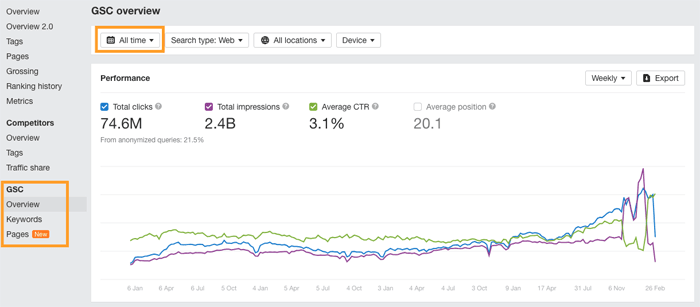
- Direct API v3 access is bundled with the Enterprise plan at $1,499.00 per month.
- Site Explorer endpoints provide data on backlinks, organic traffic, and paid ad history.
- Keywords Explorer endpoints give access to volume, difficulty, and parent topic metrics.
- Brand Radar monitors brand mentions across 243 million prompts from six AI platforms.
- Site Audit API pulls health scores and issue reports from technical crawls.
- Batch Analysis allows for checking metrics for up to 100 domains in a single request.
- Rank Tracker endpoints manage keywords and provide performance data for mobile and desktop.
- Rate limiting of 60 requests per minute ensures fair usage and system stability.
Ahrefs is best for
Serious link-building agencies and SEO professionals who need a premium API for SEO with the highest quality backlink data. It is a vital tool for enterprise companies that need to monitor their digital authority and brand references in a competitive environment. The platform is chosen when accuracy in link data is the most important factor.
Pros & cons of Ahrefs
Pros:
- Arguably the best and most current backlink database in the world.
- Brand Radar offers deep insight into AI citations that many other tools miss.
- API v3 is fast and returns structured data that is easy to integrate.
- High-level data retention of up to 5 years for historical analysis.
- Technical site audits are highly detailed and catch nuanced indexing issues.
Cons:
- Extremely expensive for small teams or solo developers.
- Access to the API requires an annual commitment at the Enterprise tier.
- No free trial is available for testing the paid API functionality.
Pricing overview of Ahrefs
Ahrefs has the highest pricing floor in the industry and requires significant commitment.
- Enterprise Plan: $1,499.00 per month (or $14,990 annually) is the starting point for API access.
- Standalone API: Subscriptions start at $500.00 per month for 500,000 data rows.
- API Plus: $2,000.00 per month for 5 million rows for high-volume needs.
- Brand Radar: Costs $199.00 per month per platform or $699.00 for the full bundle.
- Prepaid Units: Annual subscribers can buy extra API units at a discount.
Use Cases of Ahrefs
- Building an enterprise dashboard to track brand authority and “Citation Drift” in AI search.
- Managing a large-scale digital PR campaign where link quality and authority are the main KPIs.
- Tracking the long-term SEO impact of content updates using historical ranking data.
- Conducting bulk competitor analysis for e-commerce brands with tens of thousands of products.
- Providing high-fidelity search data to internal business intelligence teams for market forecasting.
Majestic SEO Analysis API
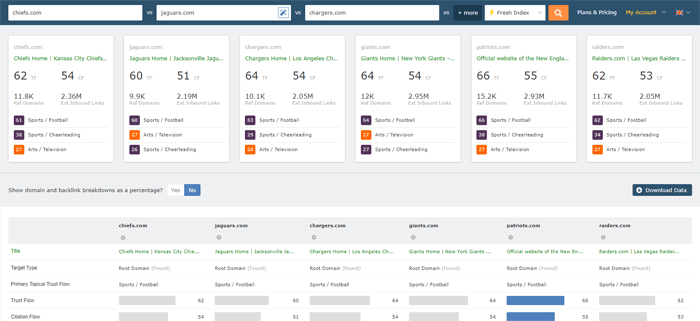
- The Fresh Index is updated multiple times daily with the latest web crawl data.
- The Historic Index dates back to 2006 for deep link profile research.
- API plan supports up to 5 users and provides 100 million analysis units monthly.
- Trust Flow and Citation Flow metrics help determine the authority and quality of any URL.
- The Search Explorer API allows for finding keywords and sites based on link context.
- OpenApps allow developers to build tools that other Majestic users can use.
- Clique Hunter reveals which sites link to multiple competitors but not your site.
- Bulk Backlink Checker can process thousands of domains for link metrics in one go.
Majestic is best for
Specialized link-building teams and domain researchers who need a high-volume SEO analysis API focused entirely on the link graph. It is the tool of choice for projects where authority monitoring and historical link trends are more important than keyword rankings. Developers building specialized link tools often start here because of the raw power of the index.
Pros & cons of Majestic
Pros:
- Massive historical link data that goes back further than almost any other tool.
- The API tier is reasonably priced for the amount of raw link units you get.
- No reliance on third-party data; they crawl and index the web themselves.
- The Link Graph feature allows for visualizing the link network of any domain.
- Offers bank transfers and offline billing for annual agency plans.
Cons:
- Very little data on keyword search volume or on-page technical issues.
- The interface feels older and less refined than modern SEO tools.
- API access is only available on the highest monthly tier.
Pricing overview of Majestic
Majestic pricing is based on access to the indexes and the number of analysis units.
- Lite Plan: $49.99 per month for basic Fresh Index link checks (no API).
- Pro Plan: $99.99 per month adds the Historic Index and more reports (no API).
- API Plan: $399.99 per month (or $333.33 annually) for full API access and 100M units.
- Scale Options: Plans go up to 1 billion analysis units for enterprise developers.
Use Cases of Majestic
- Auditing the backlink profiles of thousands of potential domain purchases for a private blog network.
- Monitoring the growth of brand authority using the Trust Flow metric over several years.
- Building a specialized competitor analysis tool that focuses on link gap identification.
- Protecting high-value SaaS domains from negative SEO by monitoring link context changes.
- Integrating link authority scores into a custom CRM for outreach prioritizing.
Modern Search Dynamics: SaaS, E-commerce, and Outsourcing
The transition from traditional SEO to AEO and GEO is fundamentally changing how we use data. We think the old way of just tracking positions one through ten is ending:
- In the SaaS world, we see that ranking for a high-volume keyword is useless if ChatGPT summarizes a competitor instead of you. The shift to a reasoning-based search engine means your data stack must now track how AI “understands” your brand entity.
- For e-commerce teams, the challenge is the “zero-click” economy. With 60% of searches ending without a click to a website, your API for SEO metrics must track brand impressions within AI answers, not just web sessions. We recommend using a best API for SEO that can pull Merchant Center data alongside search rankings so you can see if your pricing is being used as a citation in an AI “best under $500” list.
- IT outsourcing companies and large software houses face a different problem: scaling their reporting for hundreds of clients. For these teams, a search engine rankings API needs to be reliable and easy to integrate with existing BI tools like Looker Studio. Using an SEO integration API that offers webhooks and clear documentation reduces the hourly cost of your engineering team, which is often higher than the cost of the API itself.
The most successful teams are moving toward “Agentic SEO.” This involves using a best SEO API to feed real-time data into LLMs that can then perform tasks like gap analysis, technical auditing, and content optimization. Tools that offer MCP servers are the best SEO API providers for this because they remove the manual export step, letting the AI work directly with the data.
Conclusion
Choosing a technical partner for search data in 2026 requires looking beyond the monthly price. The best SEO data API is the one that fits your technical workflow and covers the new generative search engines where users are spending their time:
- For most agencies and SaaS companies, SE Ranking offers the most flexible and future-proof bridge with its MCP server and AEO tracking.
- DataForSEO is still the king of raw scale for tool builders who need a pure data layer at the lowest cost.
- Enterprise teams will likely stick with Semrush or Ahrefs for their enormous databases and historical depth, despite the higher monthly commitments.
Regardless of which you choose, the key is to move toward SEO API automation to save time and focus on the strategy that actually drives revenue.
FAQ
What is the best SEO API for a new startup?
For a startup on a budget, SE Ranking or DataForSEO are the top choices. SE Ranking offers an easy-to-use standalone API starting at 50 dollars.
How do I track rankings in AI engines like Perplexity?
You need an API that supports AI visibility tracking. SE Ranking’s AI Search API is designed to monitor citations and mentions within conversational search results rather than just traditional links.
Which API is best for local rank tracking?
DataForSEO and Semrush are very strong for local tracking. They allow you to specify search coordinates or ZIP codes to see exactly what users in a specific neighborhood are seeing.
Can I use these APIs to automate my client reports?
Yes, most of these providers offer an SEO report API that integrates with tools like Looker Studio, Make, or n8n. This allows you to pull rank, link, and audit data directly into your reporting dashboards without manual work.