The fastest way to find wholesale distributors is to start from the brand, not from a search engine. Every brand that sells through retail has a short list of distributors it has approved. Those are the companies you want. Supplier discovery software exists to show you that list in minutes, instead of the weeks it takes to build it by hand.
This guide walks through the full process. It covers where resellers look for distributors today, how software shortens the search, how to tell an authorized distributor from a middleman, what distributors ask for before they open an account, and how to compare two price lists without getting fooled by the lower number.
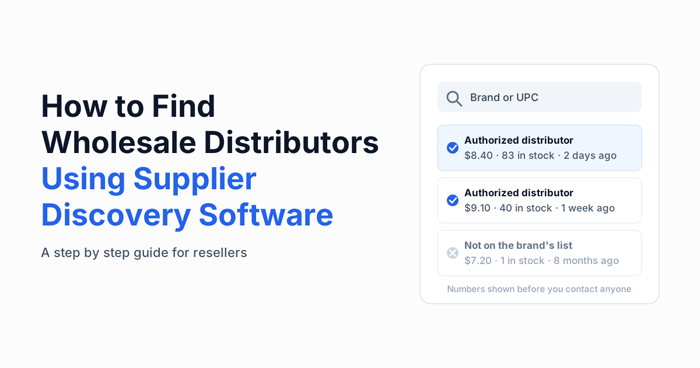
Table of Contents
Why Finding the Right Distributor Matters More than Finding a Cheap One
Most new resellers start by searching for the lowest price. That is the wrong first filter. The first filter is whether the distributor is authorized by the brand.
Here is why. Marketplaces and brands now check where stock came from. Amazon asks for invoices when a buyer complains or a category is gated. A brand can file a complaint against a listing that uses stock it never sold into that channel. In both cases, an invoice from a distributor the brand does not recognize is worth very little. The product can be real and the invoice can still fail.
So the goal is not “a distributor.” The goal is the distributor the brand would vouch for. Once you have that, price negotiation starts from a safe position.
Where Resellers Search for Distributors Today
Before software, the search looked like this.
Brand websites. Some brands publish a “where to buy” or “authorized dealers” page. It is the most trustworthy source, but fewer than half of mid-size brands maintain one, and the list is often out of date.
Trade shows. ASD Market Week, NY NOW, and category shows put distributors in one room. They work well if you can travel and if your category has a show. They do not help on a Tuesday in March when you need a supplier for one product.
General directories. ThomasNet, Kompass, and Wholesale Central list thousands of companies. The weakness is that anyone can list, and the entries say nothing about which brands a company is approved to carry.
Product packaging. The distributor of record is sometimes printed on the box or on the import label. It is a good trick and it works for a single product at a time.
Asking the brand. Email the brand’s sales department and ask who distributes to resellers in your region. Replies take days and many brands do not answer small accounts.
All of these methods share one problem. They find companies. They do not tell you whether a company is the brand’s approved channel, what it charges, or whether it has stock. You still have to open an account to learn the facts that matter.
How Supplier Discovery Software Shortens the Search
Supplier discovery software flips the order. Instead of finding a company and then checking what it carries, you start from a product or a brand and see which distributors carry it.
A good tool does four things.
- Maps brands to distributors. You type a brand name and see the distributors that stock it, with a count. Directories that list B2B wholesale distributors by brand save the most time, because the brand is the question you actually have.
- Shows the numbers before you open an account. Wholesale cost range, number of units in stock, and the date the listing was last updated. These three numbers tell you more about a distributor than a sales call does.
- Flags authorization. The tool shows whether the distributor is on the brand’s approved list, so you can skip the ones that are not.
- Works from where you already are. A browser extension that reads an Amazon listing and shows the distributors behind it removes the copy and paste step.
B2B Supplier Hub is one example of this kind of tool. Its database covers distributors across electronics, sports and outdoor, tools and home improvement, and other categories. You can search by brand, product name, or UPC and see every number for free. You pay only when you decide to reveal a supplier’s contact details.
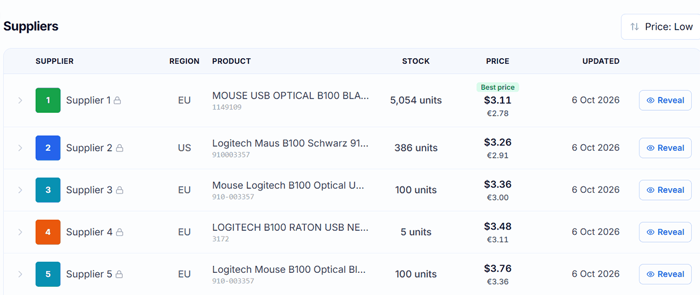
The free search is enough to tell you whether a product is worth pursuing at all. Search a product like the Logitech B100 mouse, and the result shows five distributors, their cost from $3.11 to $3.76, and their stock.
Step 1: Start with the Product You Already Sell or Want to Sell
Pick one product. Not a category, not a niche. One SKU with a UPC. Specific searches return specific distributors. Broad searches return the same general directories you were trying to avoid.
Step 2: Search the Brand, not the Product Type
Type the brand name into the tool. The result you want is a list of distributors with a count next to each brand. Three distributors for a brand is normal. Thirty is a signal that the brand sells to almost anyone, which usually means thin margins. Zero means the brand sells direct or through one exclusive partner, and you should move on unless you have a reason to chase it.
Step 3: Read the Masked Listing Before You Spend Anything
Most tools show a masked listing first. It hides the distributor’s name but shows the numbers. Read three of them.
- Cost spread. If the same product shows a wholesale cost from $8.40 to $11.90 across distributors, the spread tells you how much room there is to negotiate and which distributor sits at the top of the chain.
- Stock depth. One unit in stock is not a supplier. It is a leftover. Eighty three units is a supplier. A “best price” on a single unit is not the best choice.
- Last updated date. A listing updated this week is live. One updated eight months ago may belong to a distributor that dropped the brand.
Step 4: Reveal Only the Distributors that Pass All Three Checks
Now spend the credit, or open the account, only on the distributors whose numbers make sense. In practice, this is one or two per brand, not ten. The point of the software is to make the expensive step, which is the account application, rare.
How to Tell an Authorized Distributor from a Middleman
An authorized distributor buys directly from the brand under a written agreement. A middleman buys from an authorized distributor or from another middleman and resells. There can be three or four layers between the brand and you.
The product is identical at every layer. The paperwork is not. Only the authorized layer can produce a paper trail that leads back to the brand, and that trail is what a marketplace or a brand will ask for.
Three checks separate the two.
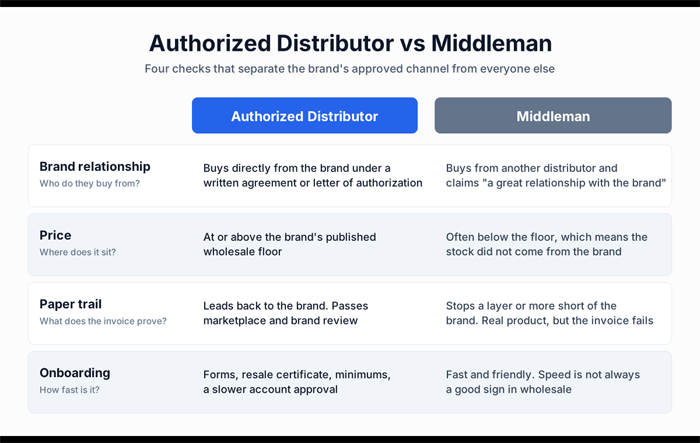
Check 1: Ask for the brand relationship in writing. An authorized distributor can show a letter of authorization or name the brand’s channel manager. A middleman will say “we have a great relationship with the brand,” which is not an answer.
Check 2: Look at the price list. If a distributor’s price on a product is lower than the brand’s published wholesale floor, the stock did not come from the brand. Someone up the chain is clearing inventory, and that inventory carries risk.
Check 3: Look up the brand’s authorized distributors before you contact anyone. This is where the software earns its place. The B2B Supplier Hub brand lookup lists a brand’s authorized distributors, so you know the approved names before the first email goes out. If the distributor you found is not on that list, treat it as a middleman until it proves otherwise.
One more sign. Authorized distributors have minimums, forms, and a slower onboarding. Middlemen are fast and friendly. Speed is not always a good sign in wholesale.
What Distributors Ask for Before They Open an Account
Authorized distributors run a short vetting process. Have these ready before you apply and the application moves in days instead of weeks.
- A resale certificate from your state, or the equivalent sales tax exemption document. Without it the distributor has to charge you sales tax, and most will not open the account at all.
- A registered business. An LLC or corporation with an EIN. Sole proprietors can apply, but many distributors prefer a registered entity.
- A business address and phone number that match across your website, your marketplace storefront, and your application. Mismatches get applications flagged.
- Where you sell. Some distributors do not sell to Amazon sellers, or only sell to sellers with brand approval. Say it up front. Being refused in the first email is better than being refused after you have placed an order.
- Expected monthly volume. Be honest. A distributor that expects $5,000 a month and gets $500 will stop returning calls.
- Trade references for larger accounts. Two other suppliers who will confirm you pay on time.
Keep a folder with scans of all of this. Every application asks for the same set.
How to Compare Price Lists without Getting Fooled
Two distributors send you a price list for the same brand. The first is cheaper on the product you asked about. Resist the urge to stop there. Compare five things.
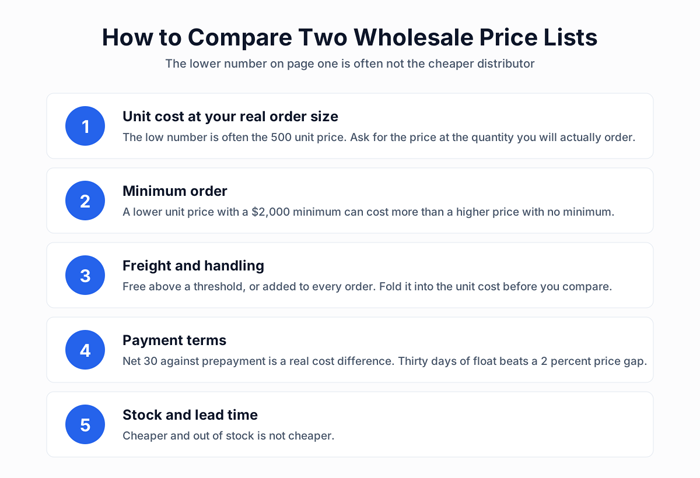
- Unit cost at your real order size. Tier pricing is common. The low number on the sheet is often the 500 unit price. Ask for the price at the quantity you will actually order.
- Minimum order. A lower unit price with a $2,000 minimum can cost you more than a higher unit price with no minimum, once you count the cash tied up in stock you cannot sell yet.
- Freight and handling. Some distributors ship free above a threshold. Others add freight to every order. Add it to the unit cost before you compare.
- Payment terms. Net 30 from one distributor and prepayment from another is a real cost difference. Thirty days of float on $3,000 of stock is worth more than a 2 percent price gap to a new reseller.
- Stock and lead time. Cheaper and out of stock is not cheaper.
Put the two lists side by side in a spreadsheet with these five rows. The cheaper distributor is often not the one with the lower number on the first page.
A Simple Weekly Routine
Finding wholesale distributors is not a one time project. Brands change distributors, distributors drop brands, and prices move. A short routine keeps your supplier list current.
- Monday: Search two new brands in your category in the discovery tool. Note the distributor count and the cost spread.
- Wednesday: Check the last updated date on your current suppliers’ listings. Anything older than 60 days gets a call.
- Friday: Apply to one new authorized distributor using the folder of documents above.
Four applications a month is enough to build a supplier base that does not depend on any single company.
Summary
To find wholesale distributors that a brand and a marketplace will accept, start from the brand, use supplier discovery software to see which distributors carry it and what they charge, check for authorization before you make contact, prepare your documents in advance, and compare full price lists rather than a single unit cost. The reseller who does this spends less time on the search and far less time explaining an invoice that failed review.